Showing posts with label I love .... Show all posts
Showing posts with label I love .... Show all posts
Tuesday, January 15, 2013
Phyllis & Ada are working
Robert Mair was this morning’s guest on Radio 4’s Life Scientific.
During the course of the conversation it emerged that, as they spoke, Phyllis was busy tunnelling not far from Broadcasting House.
How lovely to think of her under the very streets which the eponymous Phyllis Pearsall so diligently explored on foot in the course of compiling her A to Z.
Links
BBC Radio 4: Life Scientific
Professor Robert Mair CBE, FREng, FRS
At home: Robert Mair
Related post
Vote for Phyllis & Ada

Wednesday, November 28, 2012
Synchronicity?
Is somebody trying to tell us something? Yet more Canadian coincidences, courtesy of the BBC.
Last night, in the space between the end of the live concert on Radio 3 & the beginning of Night Waves, the announcer gave a plug to tonight’s concert which will include – Benjamin Britten’s Canadian Carnival. And then, by way of a taster, played us a recording of Britten’s Young Apollo which was commissioned by the Canadian Broadcasting Corporation and was first performed in that country in 1939. The composer was the soloist.
The announcer told us how this work was inspired by a line from Keats Hyperion:
"He stands before us - the new, dazzling Sun-god, quivering with radiant vitality."
That seems OTT, even though great things are expected of Mark Carney as the next Governor of the Bank of England.
Links
Related post
Saturday, November 10, 2012
People like us
When we look up into the clear night sky … We are looking into chaos, a vague cloud of solidified droplets, arranged in patterns that have no discernible regularity. But the relationship within this cloud, however irregular, however incomprehensible, seem to remain unchanged night after night, year after year, century after century, millennium after millennium; & gradually our skill at metaphor, our ability to see shapes where no shape is offered, enable us to shape even this final wilderness … Even if we get no further than the Plough, Cassiopeia, & Orion, their gratifying discernibility gives us a hold on the rest of the universe - Michael Frayn: The Human TouchThere must be lots of us around
Related posts
Wednesday, March 14, 2012
Planetary stirrers
The skies were clear last night, so we went out to observe Venus & Jupiter.
Beautiful.
And as an added bonus Orion was so low down he seemed to be just over the garden wall.
Beautiful.
And as an added bonus Orion was so low down he seemed to be just over the garden wall.
Monday, December 19, 2011
Dry stone wall woman
Back in October I caught the end of an item on the Today programme which I was sorry to have missed. At long last I have followed the instruction in my notebook to follow it up by Googling ‘dry stone wall woman.’
Now I know what I want for Christmas.
Now I know what I want for Christmas.
Thursday, November 17, 2011
Black is the colour
An unexpected treat right at the beginning of Max Reinhardt's Late Junction on Radio 3 last night – Langston Hughes's description of Nina Simone’s voice - as different from other singers as beer from champagne or crackers from crepes suzettes - followed by one of her earliest recordings (1955), Black is the colour of my true love’s hair.
Magic.
Magic.
Friday, October 21, 2011
Infinity on a scaffold
I just love this one.
Scientists have set up a large experiment to count the number of grains of sand on a beach in Cornwall. To do this they have needed to erect over 130 feet of scaffolding. It has taken five years to set it up.
Seriously, they are counting how many grains are moved up & down by the tide, to provide new fundamental information about the process of coastal erosion.
To see a world in a grain of sand,
And a heaven in a wild flower,
Hold infinity in the palm of your hand,
And eternity in an hour.
Scientists have set up a large experiment to count the number of grains of sand on a beach in Cornwall. To do this they have needed to erect over 130 feet of scaffolding. It has taken five years to set it up.
Seriously, they are counting how many grains are moved up & down by the tide, to provide new fundamental information about the process of coastal erosion.
To see a world in a grain of sand,
And a heaven in a wild flower,
Hold infinity in the palm of your hand,
And eternity in an hour.
William Blake - Auguries of Innocence
Wednesday, June 08, 2011
Bean sprouts
On the day we were told that it was the bean sprouts what done it, I heard Hugh Pennington on the radio telling us that bean sprouts are still safe to eat when thoroughly cooked, say in a stir fry.
I don’t do stir frys & I don’t eat raw bean sprouts – at least not at home - but there is one dish I like when feeling lazy & my appetite is not that good.
Just cook a whole bag of bean sprouts in a pan with a well fitting lid, having added some light soy sauce, brown sugar, lemon juice & oil (& perhaps a small piece of dried red chilli). Done in minutes.
Can be eaten with various other things you have to hand if you need more calories. Buttered cream crackers; broccoli; crumbly white cheese; ham.
I once ate it with some grapes – their cool sweetness went very well with the salty bite.
I don’t do stir frys & I don’t eat raw bean sprouts – at least not at home - but there is one dish I like when feeling lazy & my appetite is not that good.
Just cook a whole bag of bean sprouts in a pan with a well fitting lid, having added some light soy sauce, brown sugar, lemon juice & oil (& perhaps a small piece of dried red chilli). Done in minutes.
Can be eaten with various other things you have to hand if you need more calories. Buttered cream crackers; broccoli; crumbly white cheese; ham.
I once ate it with some grapes – their cool sweetness went very well with the salty bite.
Related post
Organic cucumbers
Organic cucumbers
Wednesday, June 01, 2011
Music of birth & death
Max Beesley did Private Passions on Sunday.
It was mostly just background listening as I got on with other things, but for some reason I was paying attention as he introduced his final track.
He had first heard it on his headphones as he was being driven down the motorway from Manchester to Luton by two of his teachers from Chetham’s .
He told us that the structure of the piece was immediately clear to him – a birth, a life, death, rebirth. He wants it played at his funeral.
Goodness me. He certainly had my attention now & I listened intently.
I can say with confidence that I would never have arrived at that interpretation for myself, unaided, though I think I could hear it once it had been pointed out.
The word that immediately comes to mind is busy – a very busy life.
But, somewhat disconcertingly, the moment of birth & the moment of death were each represented by a very distinct PLOP.
Not unlike the sound that comes through my headphones when I remove my memory stick from the library computer, even though I have been assured that it is safe to do so.
Exhilarating, as Michael Berkeley put it.
The piece was from Third Wind (track 5) from Still Life (Talking) by the Pat Metheny Group
It was mostly just background listening as I got on with other things, but for some reason I was paying attention as he introduced his final track.
He had first heard it on his headphones as he was being driven down the motorway from Manchester to Luton by two of his teachers from Chetham’s .
He told us that the structure of the piece was immediately clear to him – a birth, a life, death, rebirth. He wants it played at his funeral.
Goodness me. He certainly had my attention now & I listened intently.
I can say with confidence that I would never have arrived at that interpretation for myself, unaided, though I think I could hear it once it had been pointed out.
The word that immediately comes to mind is busy – a very busy life.
But, somewhat disconcertingly, the moment of birth & the moment of death were each represented by a very distinct PLOP.
Not unlike the sound that comes through my headphones when I remove my memory stick from the library computer, even though I have been assured that it is safe to do so.
Exhilarating, as Michael Berkeley put it.
The piece was from Third Wind (track 5) from Still Life (Talking) by the Pat Metheny Group
Thursday, May 26, 2011
Sharing family histories
On Monday the President visited the home of Fulmuth Kearney, his Irish great-great-great-grandfather, in Moneygall.
On Tuesday the Queen showed the President her great-great-great-grandfather’s diary.
The bit which records that ‘America is lost!’
The Queen has just surpassed her great-great-great-grandfather, George III, to become the second longest serving British monarch.
On Tuesday the Queen showed the President her great-great-great-grandfather’s diary.
The bit which records that ‘America is lost!’
The Queen has just surpassed her great-great-great-grandfather, George III, to become the second longest serving British monarch.
Tuesday, April 12, 2011
Previously in favourite quotations (13)
Never believe what you want to believe until you know what you ought to know - Sir Eyre Crowe
To speak of a better understanding among nations is to speak of harmony & goodwill, not of successful mutual prying & spying - Mary Midgley
Life has taught us that love does not consist in gazing at each other but in looking together in the same direction - Antoine de Saint-Exupery
All politicians are abnormal - Joseph Stalin
It takes in reality only one to make a quarrel. It is useless for the sheep to pass resolutions in favour of vegetarianism while the wolf remains of a different opinion - Dean Inge
To speak of a better understanding among nations is to speak of harmony & goodwill, not of successful mutual prying & spying - Mary Midgley
Life has taught us that love does not consist in gazing at each other but in looking together in the same direction - Antoine de Saint-Exupery
All politicians are abnormal - Joseph Stalin
It takes in reality only one to make a quarrel. It is useless for the sheep to pass resolutions in favour of vegetarianism while the wolf remains of a different opinion - Dean Inge
Elephants googling about
The garden of a pub in Wales is being dug over in search of the remains of a dead elephant. The, to me, most improbable part of this story is that the elephant is said to have died from lead poisoning from the polluted local water that it drank.
Is that possible? How much lead does it take to kill an elephant, or even to make it poorly?
A question which seems destined to remain unanswered, though I did find a reference to Lead Poisoning in Waterfowl (with a note on elephants) in the section on Diseases reported only from Experimental Infection, or as a Host with no Clinical Signs on the website of the Wildlife Information Network.
Elephants also figure – one as metaphor, one a soft toy - in two recent papers on still-existing concerns about lead poisoning in children in America.
We live & learn
Is that possible? How much lead does it take to kill an elephant, or even to make it poorly?
A question which seems destined to remain unanswered, though I did find a reference to Lead Poisoning in Waterfowl (with a note on elephants) in the section on Diseases reported only from Experimental Infection, or as a Host with no Clinical Signs on the website of the Wildlife Information Network.
Elephants also figure – one as metaphor, one a soft toy - in two recent papers on still-existing concerns about lead poisoning in children in America.
We live & learn
Links
University archaeologists to dig for Tregaron elephant
University archaeologists start Tregaron elephant dig
Lead Poisoning in Waterfowl (with a note on elephants)
The elephant in the playground
“Edgar the Elephant” Educates Kansas Kids About Lead Poisoning
Related posts
Wild life in the garden
Barbara Clayton
University archaeologists to dig for Tregaron elephant
University archaeologists start Tregaron elephant dig
Lead Poisoning in Waterfowl (with a note on elephants)
The elephant in the playground
“Edgar the Elephant” Educates Kansas Kids About Lead Poisoning
Related posts
Wild life in the garden
Barbara Clayton
Saturday, March 26, 2011
Penguin punk

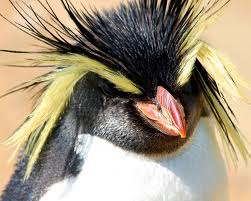
I just could not resist this picture of northern rockhopper penguins – sadly in peril from an oil slick.
They come from Nightingale Island – named, not for the bird, but by the English captain Gamaliel Nightingale, who in 1760 changed its name from Broken Island.
I should like to think that he was the Gamaliel Nightingale who was born in Barbados in 1710, the son of Captain Nathaniel (Nightengale) Nightingale
Thursday, February 10, 2011
I ♥ Radio 4
The BBC Trust’s review of Radio 4 has been widely reported as requiring the station to broaden it’s appeal, to bring in the younger, more northern but ‘lighter’ & more ethnically diverse listener.
Goodness knows what this is supposed to mean. I abandoned my own attempt to contribute to the review by answering an online questionnaire whose questions made no sense.
On the more cheerful side the report also asks for more hours of original documentaries.
This morning brought us a perfect example of the station’s ability to provide us with unexpected insights from one such documentary in I ♥ Milton Glaser, about the genesis of one of the most recognizable pieces of design in the world.
A story particularly apt right now – it was commissioned when New York was the bankrupt crime capital of the world, facing swingeing cuts in public services. And Milton Glaser reiterated firmly that he feels no regret at having foregone what could have been a fortune – he did the work pro bono, for expenses only.
What could be more Big Society than that.
Goodness knows what this is supposed to mean. I abandoned my own attempt to contribute to the review by answering an online questionnaire whose questions made no sense.
On the more cheerful side the report also asks for more hours of original documentaries.
This morning brought us a perfect example of the station’s ability to provide us with unexpected insights from one such documentary in I ♥ Milton Glaser, about the genesis of one of the most recognizable pieces of design in the world.
A story particularly apt right now – it was commissioned when New York was the bankrupt crime capital of the world, facing swingeing cuts in public services. And Milton Glaser reiterated firmly that he feels no regret at having foregone what could have been a fortune – he did the work pro bono, for expenses only.
What could be more Big Society than that.
Friday, January 21, 2011
Playing the spoons
I was looking for a video of spoon playing which might remind me of my grandfather. No luck – lots of choice, but none remotely like grandpa, modern spoon players seem distressingly fond of aggressive t shirts - Granpa was Harris tweed jacket & grey flannel trousers.
I did find two extraordinary examples however.
One old man, in what to my eye looks like a distinctly Caribbean setting, playing a guitar with a spoon.
And Artis the Spoonman, whose fame was previously unknown to me.
Even better, for a realy remarkable souindtrack, play both videos simultaneously.
I did find two extraordinary examples however.
One old man, in what to my eye looks like a distinctly Caribbean setting, playing a guitar with a spoon.
And Artis the Spoonman, whose fame was previously unknown to me.
Even better, for a realy remarkable souindtrack, play both videos simultaneously.
Monday, January 03, 2011
Kepler’s moon travellers
In his book The Dream Kepler imagined the day when humans might fly to the moon, & considered very carefully what sort of person would be best suited to such a trip.
Anyone who is inactive, fat, or pleasure-loving should obviously be barred.
To be German or Spanish would be good.
A life spent on horseback, in between sailing often to the Indies (thus becoming inured to a diet of hard tack, garlic & dried fish) would put you into the highly recommended category.
But the best space travellers would be ‘dried up old crones who since childhood have ridden over great stretches of the earth at night in tattered cloaks on goats or pitchforks’.
I have put my name down.
Anyone who is inactive, fat, or pleasure-loving should obviously be barred.
To be German or Spanish would be good.
A life spent on horseback, in between sailing often to the Indies (thus becoming inured to a diet of hard tack, garlic & dried fish) would put you into the highly recommended category.
But the best space travellers would be ‘dried up old crones who since childhood have ridden over great stretches of the earth at night in tattered cloaks on goats or pitchforks’.
I have put my name down.
Link
Kepler's Dream
Related post
Quantum history
Kepler's Dream
Related post
Quantum history
Thursday, December 30, 2010
Wandering home
Mohammed Bellazrack had an awfully big Christmas adventure.
He drove 2,000 miles in three days, trying his best to get home in time for Christmas.
The police came to guide him on the last leg of his journey.
He had been lost in the jungle of roads leading from Gatwick Airport through the great metropolis that is London & out to the hills of the West Country.
Mohammed Bellazrack is 72 years old.
He drove 2,000 miles in three days, trying his best to get home in time for Christmas.
The police came to guide him on the last leg of his journey.
He had been lost in the jungle of roads leading from Gatwick Airport through the great metropolis that is London & out to the hills of the West Country.
Mohammed Bellazrack is 72 years old.
Wednesday, December 29, 2010
Crossword economy
I sometimes find myself wishing that the Times would follow the Guardian’s lead & give nom de guerres to its cryptic crossword setters.
Most recently this has been because there is one setter whose way of thinking is so alien to my own that I often fail to understand the clue even when given the solution; what is worse, if ever I do work out an answer for myself it is accompanied by a curled lip & a loud harrumph – Call that a clue? The mere sight of his name would make sure I keep my blood pressure down by making no attempt to follow his twisted logical allusions.
But now I want to invite three cheers for whoever set crossword #24,727 (I am a bit behind because of Christmas).
There was only one clue which grated, many made me smile.
My favourite?
Probably Firm has thrown money around, not practising this? (7)
Most recently this has been because there is one setter whose way of thinking is so alien to my own that I often fail to understand the clue even when given the solution; what is worse, if ever I do work out an answer for myself it is accompanied by a curled lip & a loud harrumph – Call that a clue? The mere sight of his name would make sure I keep my blood pressure down by making no attempt to follow his twisted logical allusions.
But now I want to invite three cheers for whoever set crossword #24,727 (I am a bit behind because of Christmas).
There was only one clue which grated, many made me smile.
My favourite?
Probably Firm has thrown money around, not practising this? (7)
Sunday, December 26, 2010
Sudoku
“A Sudoku puzzle is therefore, in formal terms, a critical set for a gerechte design for the 9x9 grid partitioned into 3x3 subsquares.”
So says David Spiegelhalter in his very informative article Pure Randomness in Art which is based on a talk he gave at the recent John Cage exhibition in Kettles Yard gallery in Cambridge. It’s good to know.
It took me a while to get going on Sudoku – my initial reaction to The Times revival of the pastime in England was Boring – not a patch on the cryptic crossword, & definitely no jokes, but I started to get interested when I had to give up my habit of doing the crossword on the bus home – not enough light to read the very small print size of the clues.
I now need my daily Sudoku fix.
The craze has demonstrated once more the importance of practice & training & learning to know what is required of you – be that as a puzzle solver, a candidate for GCSE or A level, sportsman, musician, or anything else in which you want to succeed.
Gradually the Easy Sudokus have largely disappeared from the daily paper – we have moved on through medium, difficult, fiendish & now super fiendish.
I have tried to understand how the puzzles are given grades – the one thing I can say is that there is a lot of variation between different setters & publications. Some of the Super Fiendish I find laughably easy – easier than Easy in fact; once you find the pattern it all tends just to fall into place – there is even a definite rhythm as you fill in the squares, so that I can immediately feel it if I have made a mistake - another small indicator perhaps of the link between mathematical logic & music. Easy is boring, you just have to go round & round filling in the blanks, with no pattern for a guide.
I have read explanations of all this, but because they tend to be based on 'consider all the options & eliminate the ones that do not work', all that does is put my head in a spin – I really cannot cope with writing in all the possibilities & then rubbing them out. The secret is to look for the pattern & fill in each square only when you are sure.
Another tip is to try to find the key starting point(s) - diagonally opposite corners are good, sometimes the edges, sometimes the centre square; if you do get stuck, rub it all out & find a different starting point.
I also wonder if the Latin square approach offers a mathematical way of determining whether a given puzzle has a unique solution – I have come across several which do not.
So says David Spiegelhalter in his very informative article Pure Randomness in Art which is based on a talk he gave at the recent John Cage exhibition in Kettles Yard gallery in Cambridge. It’s good to know.
It took me a while to get going on Sudoku – my initial reaction to The Times revival of the pastime in England was Boring – not a patch on the cryptic crossword, & definitely no jokes, but I started to get interested when I had to give up my habit of doing the crossword on the bus home – not enough light to read the very small print size of the clues.
I now need my daily Sudoku fix.
The craze has demonstrated once more the importance of practice & training & learning to know what is required of you – be that as a puzzle solver, a candidate for GCSE or A level, sportsman, musician, or anything else in which you want to succeed.
Gradually the Easy Sudokus have largely disappeared from the daily paper – we have moved on through medium, difficult, fiendish & now super fiendish.
I have tried to understand how the puzzles are given grades – the one thing I can say is that there is a lot of variation between different setters & publications. Some of the Super Fiendish I find laughably easy – easier than Easy in fact; once you find the pattern it all tends just to fall into place – there is even a definite rhythm as you fill in the squares, so that I can immediately feel it if I have made a mistake - another small indicator perhaps of the link between mathematical logic & music. Easy is boring, you just have to go round & round filling in the blanks, with no pattern for a guide.
I have read explanations of all this, but because they tend to be based on 'consider all the options & eliminate the ones that do not work', all that does is put my head in a spin – I really cannot cope with writing in all the possibilities & then rubbing them out. The secret is to look for the pattern & fill in each square only when you are sure.
Another tip is to try to find the key starting point(s) - diagonally opposite corners are good, sometimes the edges, sometimes the centre square; if you do get stuck, rub it all out & find a different starting point.
I also wonder if the Latin square approach offers a mathematical way of determining whether a given puzzle has a unique solution – I have come across several which do not.
Wednesday, October 27, 2010
Never alone
Proof at last – you are never really really alone.
There are lots of us fans & admirers of electricity pylons out here.
I kmow that now, thanks to the publicity for a BBC tv programme The Secret Life of the National Grid
There are lots of us fans & admirers of electricity pylons out here.
I kmow that now, thanks to the publicity for a BBC tv programme The Secret Life of the National Grid
Links
Subscribe to:
Posts (Atom)